Advice
How to Fix a Waterlogged Garden in Ireland
TL;DR
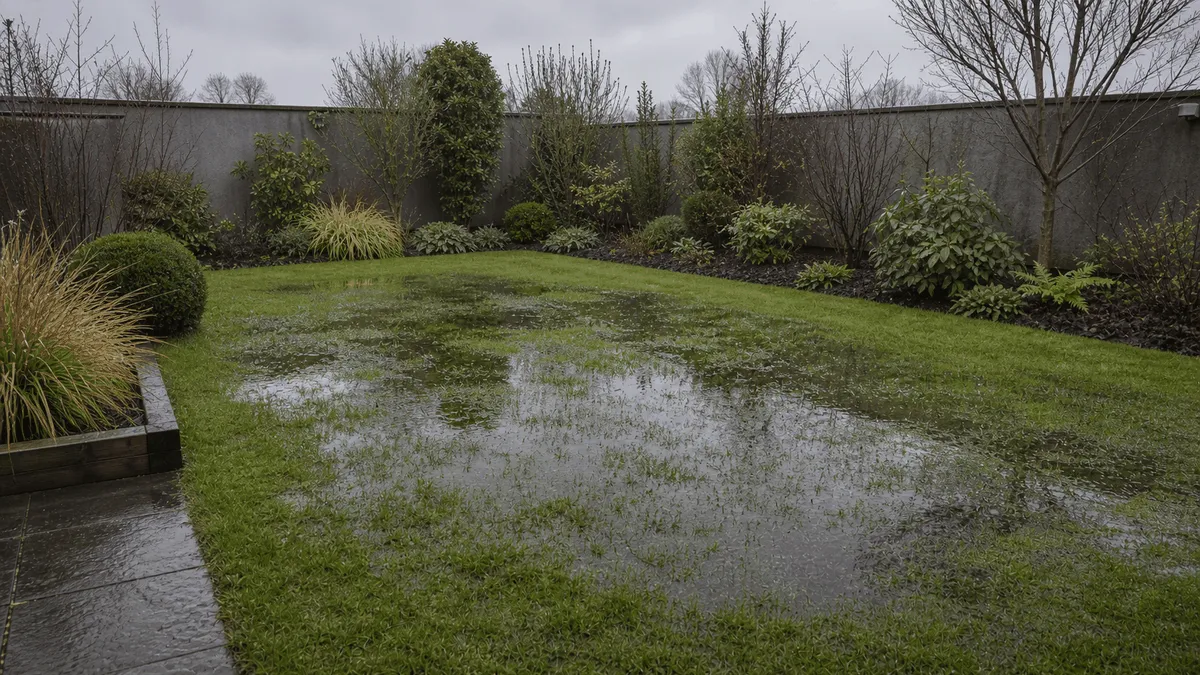
Most Irish gardens waterlog because heavy clay soil and high rainfall leave the water nowhere to go. The fixes are drainage (a French drain to intercept water, a soakaway to take it away), regrading the surface, improving the soil, and planting species that cope with wet ground. French drains start around €150 per metre.
Why is my garden waterlogged?
In most of Ireland the cause is heavy clay subsoil combined with high rainfall and nowhere for the water to escape. Clay holds water rather than letting it drain through, so it sits on the surface or collects in low spots.
Compaction makes it worse, especially in new builds where machinery has flattened the ground and topsoil is thin. Add a garden that slopes towards the house and you have water sitting where you least want it.
First, find out where the water goes
Before digging anything, the question is always: where can the water go? A drain, a watercourse, a soakaway pit, or a lower part of the site. Drainage only works if there is somewhere for the water to end up.
We check the levels, the wettest spots, and the soil, then design the system around the answer. Guessing is how people install drains that simply move the problem a few metres.
French drains
A French drain is a gravel-filled trench with a perforated pipe that intercepts water in the ground and carries it away. It is the workhorse of garden drainage, ideal for drying out a waterlogged lawn or keeping water away from a house.
Laid to the right fall and connected to a soakaway or outfall, it works quietly underground for decades. French drains start around €150 per linear metre installed.
Soakaways
Where there is no drain or watercourse to send water to, a soakaway gives it somewhere to go. It is a large underground void, made of crates or stone, that collects water and lets it soak slowly into the ground.
A soakaway must be sized for your rainfall and soil, and placed well away from foundations. Done right it takes the output of your drains and disperses it. A system typically starts from €1,200.
Regrading and soil improvement
Sometimes the surface itself is the problem. Regrading reshapes the ground so water runs away from the house and off the lawn towards a drain or border, rather than pooling.
Improving the soil also helps. Working grit and organic matter into heavy clay opens it up so water moves through it. For a lawn, that and good drainage together are what turn a bog back into grass you can walk on.
Plants that cope with wet ground
If part of the garden stays damp, work with it rather than against it. A bog or rain garden of moisture-loving planting turns a problem corner into a feature. Good choices for wet Irish ground include:
- Willow and dogwood for structure and winter stem colour
- Alder, a native tree that thrives in wet soil
- Astilbe, with feathery summer plumes
- Iris and ferns for damp shade
- Marsh marigold and meadowsweet for a native, wildlife-friendly look
Would you rather we just did it?
Our drainage and irrigation service, on a fixed price.
Advice
Frequently asked questions
Why is my garden always waterlogged in Ireland?
Usually because of heavy clay subsoil, high rainfall, and nowhere for the water to drain. Clay holds water instead of letting it through, so it sits on the surface or in low spots. Compaction, common in new builds, makes it worse. The fix is to intercept the water and give it somewhere to go.
How much does it cost to drain a garden?
French drains start around €150 per linear metre installed, and a soakaway system from about €1,200, depending on depth, ground, and how far the water has to travel. Because drainage is easy to get wrong, it is worth a proper assessment and a fixed quote rather than guesswork.
What is the difference between a French drain and a soakaway?
A French drain is a gravel-filled trench with a pipe that intercepts and carries water away. A soakaway is an underground void that collects that water and lets it soak into the ground. They often work together: the drain moves the water, the soakaway disperses it where there is no outfall.
Can I fix a waterlogged garden myself?
Minor issues, like improving soil or clearing a blocked gully, are within reach of a keen gardener. But a properly designed French drain or soakaway needs the right fall, the right outfall, and correct sizing, or it just moves the problem. For a genuinely waterlogged garden, it is worth getting it done right once.
What plants grow well in wet soil in Ireland?
Moisture-loving plants turn a wet corner into a feature: willow and dogwood for structure, native alder, astilbe for summer colour, and iris and ferns for damp shade. Native marsh marigold and meadowsweet suit a wildlife-friendly bog garden. Teagasc and local nurseries can advise on what suits your soil.